
Can I Drive with Bad Brakes?
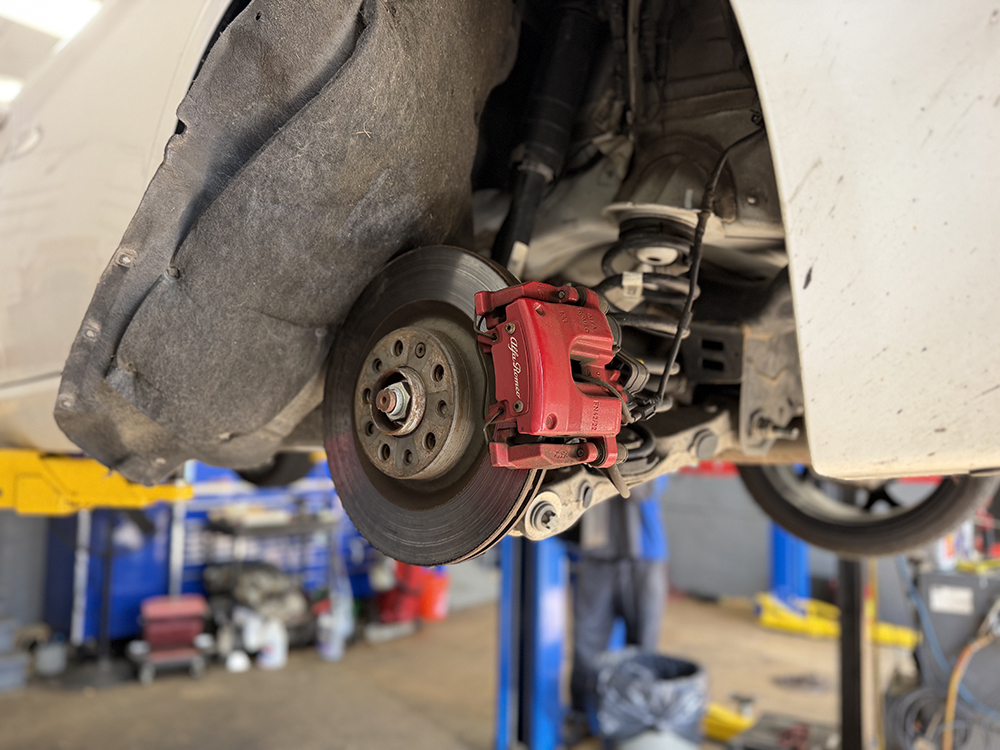
Driving in Washington, D.C., means constantly reacting to dense traffic patterns, sudden stops, pedestrians stepping into crosswalks, and unpredictable commuter flow throughout the DMV. In that environment, your braking system is doing far more than routine wear-and-tear work – it is actively responsible for keeping your vehicle controlled in situations where stopping distance can change in an instant.
Because of that, one of the most common concerns drivers bring up is whether it is still safe to drive when their brakes start feeling or sounding different. The reality is that brake issues exist on a spectrum, ranging from early warning signs that allow short-term driving to serious failures that require immediate attention. Understanding where your symptoms fall on that spectrum is critical for both safety and repair cost control.
Brake problems should never be ignored.
A modern brake system is not a single component but a coordinated set of parts working together to convert motion into controlled stopping force. Brake pads create friction against rotors, hydraulic pressure transfers force from the pedal through brake fluid, and calipers apply that force evenly to each wheel so the vehicle slows predictably. When everything is functioning properly, braking feels smooth and consistent, even under sudden stops.
The challenge is that brake wear is gradual, which means most drivers adjust their habits without realizing it. A slightly longer stopping distance, a subtle change in pedal pressure, or a faint noise can all seem minor in isolation. However, each of these changes signals that the system is moving away from optimal performance, and in a city like D.C. where stopping decisions happen constantly, even small reductions in braking efficiency matter.
Brake systems usually provide warning signs long before they reach a failure point, but those signals are often easy to dismiss.
Most brake issues begin with symptoms that develop slowly enough for drivers to adapt without noticing how much performance has changed over time. These warning signs typically fall into several categories that indicate different stages of wear or mechanical stress.
Squeaking or Squealing
High-pitched squealing is commonly caused by built-in wear indicators designed to alert drivers that brake pads are nearing the end of their usable thickness. At this stage, the vehicle is still capable of safe braking, but the system is entering a phase where continued driving without inspection will eventually lead to metal-on-metal contact if ignored. This is why squeaking is often considered an early warning rather than an emergency, but it still signals that a professional evaluation should happen soon to prevent escalation.
Grinding
Once brake pads wear down completely, the metal backing plate begins contacting the rotor surface, producing a grinding sound that indicates physical damage is actively occurring. At this point, the braking system is no longer operating within normal safety margins, and continued driving can rapidly increase repair severity. In real-world DMV traffic conditions, where stop-and-go braking is constant, grinding significantly reduces stopping reliability and can turn a simple pad replacement into a full brake system repair involving rotors and potentially calipers.
Changes in Brake Pedal Feel
A brake pedal that feels soft, spongy, or inconsistent often signals a problem within the hydraulic system, such as air in the brake lines, brake fluid leaks, or failing master cylinder components. Because hydraulic pressure is what allows braking force to be transmitted evenly to all wheels, any disruption in that system affects the entire vehicle’s ability to stop reliably. Unlike pad wear, which develops gradually, hydraulic issues can worsen quickly and should be evaluated without delay.
Vibrations or Shaking
When drivers experience steering wheel shake or pulsing in the brake pedal, especially at higher speeds on roads like I-495 or I-66, the most common cause is uneven rotor surfaces or heat-related distortion. This uneven contact between pads and rotors creates inconsistent friction, which translates into vibration felt through the steering wheel or brake pedal. While the vehicle may still stop, the uneven braking forces reduce smooth control and often worsen over time if not addressed.
Pulling to One Side
When braking force is not distributed evenly, the vehicle may drift left or right during stops. This can be caused by sticking calipers, uneven pad wear, or contamination affecting one side of the braking system. In normal conditions, this symptom is more than just an annoyance because it directly affects steering control during deceleration, particularly in wet conditions or emergency braking situations where stability is essential.
The safety of continued driving depends entirely on how severe the braking symptoms are and how quickly they are addressed.
Brake issues are not all equally urgent, which is why understanding symptom severity is important for making safe decisions. Early-stage symptoms like light squeaking may still allow short-term driving, but they should be treated as early warnings that require scheduling service before the problem progresses. Mid-level symptoms such as vibration or noticeable changes in stopping distance indicate that the system is no longer performing as intended and should be inspected as soon as possible. Severe symptoms like grinding noises, brake warning lights, or a soft pedal suggest that continued driving can significantly increase both safety risk and repair cost.
In a dense driving environment like Washington, D.C., where braking demands are constant and reaction times are short, waiting too long to address brake issues can quickly turn manageable wear into a safety-critical failure.
City driving conditions in the D.C. metro area naturally accelerate brake wear compared to highway driving environments.
Brake systems wear faster in urban environments because they are used more frequently in shorter intervals. In the DMV region, drivers regularly encounter stop-and-go traffic, frequent traffic signals, short commute distances, and sudden braking situations caused by congestion or unpredictable traffic flow. These conditions prevent brakes from cooling evenly and increase the frequency of friction cycles between pads and rotors.
Over time, this type of driving pattern leads to faster brake pad wear, increased rotor stress, and more frequent service needs compared to vehicles that primarily travel at steady highway speeds. This is why many D.C.-area drivers are surprised when brake service is needed sooner than expected, even if mileage seems relatively low.
A professional brake inspection evaluates both physical wear and real-world braking performance under driving conditions.
A proper brake inspection goes far beyond a visual check through the wheel. It requires evaluating how the system performs both statically and dynamically to understand whether braking efficiency is still within safe operating range.
At Metro Motor, brake inspections include a full road test to evaluate real-world braking behavior, a physical inspection with wheel removal to measure pad thickness and rotor condition accurately, and a full review of calipers, hardware, and hydraulic components to ensure system integrity. This combination of diagnostic steps ensures that both visible wear and performance-related issues are identified.
Every vehicle also receives a preventative maintenance inspection (PMI), which includes brake system evaluation as part of overall vehicle safety assessment. Both the PMI and dedicated brake inspection are complimentary, which removes the barrier many drivers face when trying to determine whether their brakes are safe without paying a diagnostic fee upfront. That approach reflects a broader philosophy at Metro Motor focused on helping drivers understand their vehicle condition clearly before any repair decisions are made.
Brake systems are designed so that wear occurs in predictable stages, starting with pads and eventually affecting rotors and other components if left unaddressed. When brake pads are replaced early, the rest of the system is often preserved, keeping repair costs lower and maintaining smoother braking performance. However, when worn pads are ignored, metal contact can damage rotors and increase the likelihood of additional repairs, significantly raising both cost and downtime.
From a safety perspective, early inspection also ensures that stopping distances remain consistent and predictable, which is especially important in high-traffic areas where reaction time is limited.
Drivers should schedule a brake inspection whenever they notice any change in braking behavior, no matter how small it may seem.
Brake systems are most reliable when issues are caught early, which is why even minor changes in sound, feel, or stopping performance should be taken seriously. Whether it is a new noise, a subtle vibration, or a change in pedal response, these signals often indicate the beginning of wear that can be addressed before it becomes a larger problem.
For D.C.-area drivers, staying ahead of brake issues is not just about maintenance, it is about maintaining safe, predictable control in one of the most demanding driving environments in the region. When uncertainty arises, having a trusted local auto repair shop like Metro Motor evaluate the system can help confirm whether the vehicle is safe and prevent unnecessary risk.
The safest approach is to treat any brake concern as a signal to have the system evaluated as soon as possible.
If there is uncertainty about brake performance, the system is already communicating that something has changed. While some symptoms allow limited short-term driving, others require immediate attention to prevent unsafe conditions from developing. Because braking performance directly affects every aspect of vehicle control, professional inspection remains the most reliable way to determine whether a vehicle is safe to operate.
Vehicle care information made available by Metro Motor is presented as helpful advice for general maintenance and should not be construed as instructions for at-home vehicle service. Be sure to consult your owner’s manual and a licensed, professional mechanic for diagnostics and repair.