
Why Is My Car Shaking When I Brake?
Few vehicle problems feel as alarming as a car that shakes, vibrates, or pulses when you press the brake pedal. Many drivers across Washington, D.C. immediately assume something serious is wrong and they’re right to pay attention.
Brake vibration is one of the most common warning signs technicians see, and it almost always indicates uneven braking performance somewhere in the system. The good news is that most causes are identifiable early and repairable before they become major safety concerns.
Understanding why your car shakes when braking helps you know when it’s safe to drive and when it’s time to have your vehicle inspected.
Brake vibration usually means braking surfaces are no longer making smooth contact.
Your braking system works by pressing brake pads evenly against smooth metal rotors attached to each wheel. When everything operates correctly, friction slows the vehicle smoothly and predictably.
Shaking happens when that friction becomes uneven. Instead of consistent contact, parts of the braking system grab and release repeatedly as the wheels rotate. That inconsistency travels through the suspension, steering wheel, or brake pedal, creating vibration you can feel inside the vehicle. Drivers commonly notice vibration:
- At highway speeds while slowing down
- During gradual braking approaching traffic lights
- Through the steering wheel or seat
- As a pulsing sensation in the brake pedal
At Metro Motor, brake vibration is one of the most frequent concerns brought in by D.C. drivers, especially after long commutes, heavy traffic driving, or seasonal temperature swings.
Warped or uneven brake rotors are the most common cause of shaking.
Brake rotors endure extreme heat every time you slow your vehicle. During heavy braking, such as stop-and-go commuting, downhill driving, or sudden stops, rotor temperatures can rise dramatically. Over time, repeated heating and cooling cycles can cause thickness variation across the rotor surface, heat spots that wear unevenly, and slight distortion often referred to as “warping.”
When rotors lose their perfectly flat surface, brake pads cannot maintain consistent contact, leading to vibration. Common signs of rotor-related vibration include the steering wheel shaking when braking at higher speeds or a pulsation felt mainly through the brake pedal.
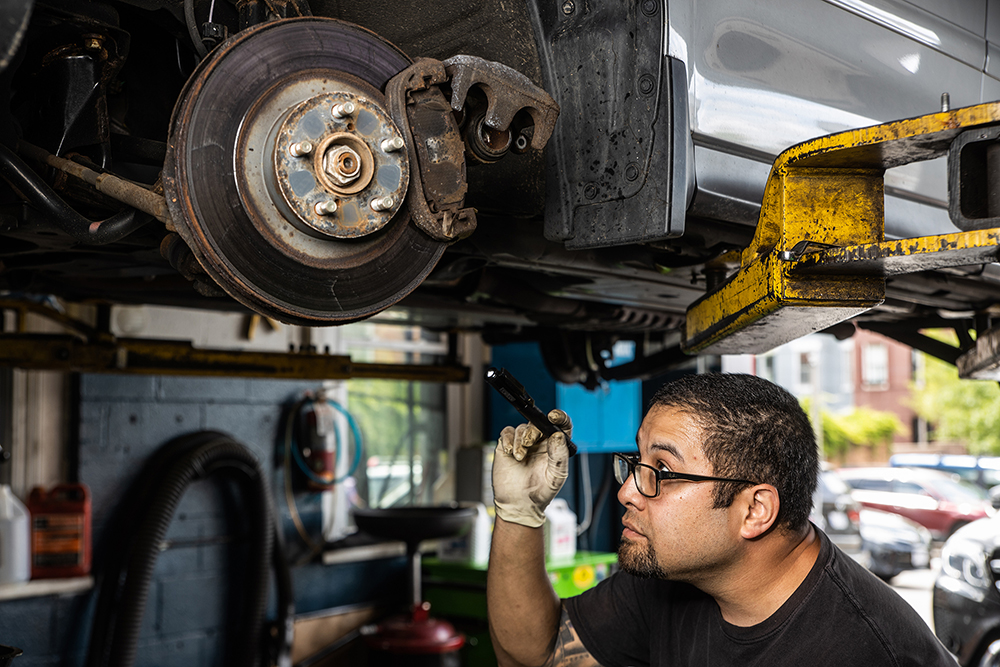
Urban driving conditions throughout Washington, D.C., accelerate rotor wear because frequent braking generates more heat than steady highway driving. A proper brake inspection, including removing wheels and measuring rotor condition, helps determine whether resurfacing or replacement is necessary.
Uneven or worn brake pads can also create vibration during stops.
Brake pads naturally wear down over time, but uneven wear can cause shaking even when pads still have material remaining. Uneven wear may result from:
- Sticking brake calipers
- Low-quality pad materials
- Heat buildup from aggressive braking
- Improper previous installation
When one section of a pad contacts the rotor differently than another, braking pressure becomes inconsistent, producing vibration or noise. Drivers may also notice squealing sounds, grinding noises, reduced stopping confidence, and increased stopping distance. Technicians at Metro Motor frequently find that replacing pads alone isn’t always enough; evaluating the entire braking system ensures the root cause is addressed rather than temporarily masked.
Suspension or steering components sometimes contribute to braking vibration.
Not all shaking originates directly from brakes. Because braking transfers weight to the front of the vehicle, worn suspension or steering parts can reveal themselves during deceleration. Possible contributors include:
- Worn control arm bushings
- Loose tie rods
- Failing ball joints
- Damaged wheel bearings
- Out-of-balance wheels
These issues may feel similar to brake problems, but they require different repairs. A comprehensive inspection helps distinguish between brake system vibration and suspension instability. This is why a proper diagnostic process, including a test drive, is essential for accurate vehicle diagnosis rather than replacing parts based solely on symptoms.
Drivers should not ignore shaking when braking because stopping performance may be affected.
Brake vibration is more than an annoyance, it can reduce braking efficiency and vehicle control. Potential risks include longer stopping distances, uneven tire wear, reduced steering stability during emergency braking, and increased strain on suspension components. While mild vibration may allow short-term driving, worsening symptoms should be evaluated promptly.
Metro Motor offers complimentary brake inspections that include a full test drive and wheel removal so technicians can examine pads, rotors, and related components closely. Many drivers schedule inspections simply for peace of mind when new vibrations appear. A professional brake inspection will identify the exact cause of vibration.
What a Brake Inspection Includes
A thorough brake inspection typically includes:
- Test drive to replicate symptoms
- Measuring rotor thickness and variation
- Inspecting brake pad wear patterns
- Checking caliper operation
- Evaluating suspension and steering components
- Confirming tire and wheel condition
Because multiple systems interact during braking, accurate diagnosis prevents unnecessary repairs and ensures long-term safety. At Metro Motor, every vehicle also receives a complimentary preventative maintenance inspection, meaning technicians often identify early brake concerns even before drivers notice vibration.
If your car begins shaking when braking, treating it as an early warning sign, rather than waiting for louder noises or reduced braking power, is the safest approach.
Vehicle care information made available by Metro Motor is presented as helpful advice for general maintenance and should not be construed as instructions for at-home vehicle service. Be sure to consult your owner’s manual and a licensed, professional mechanic for diagnostics and repair.